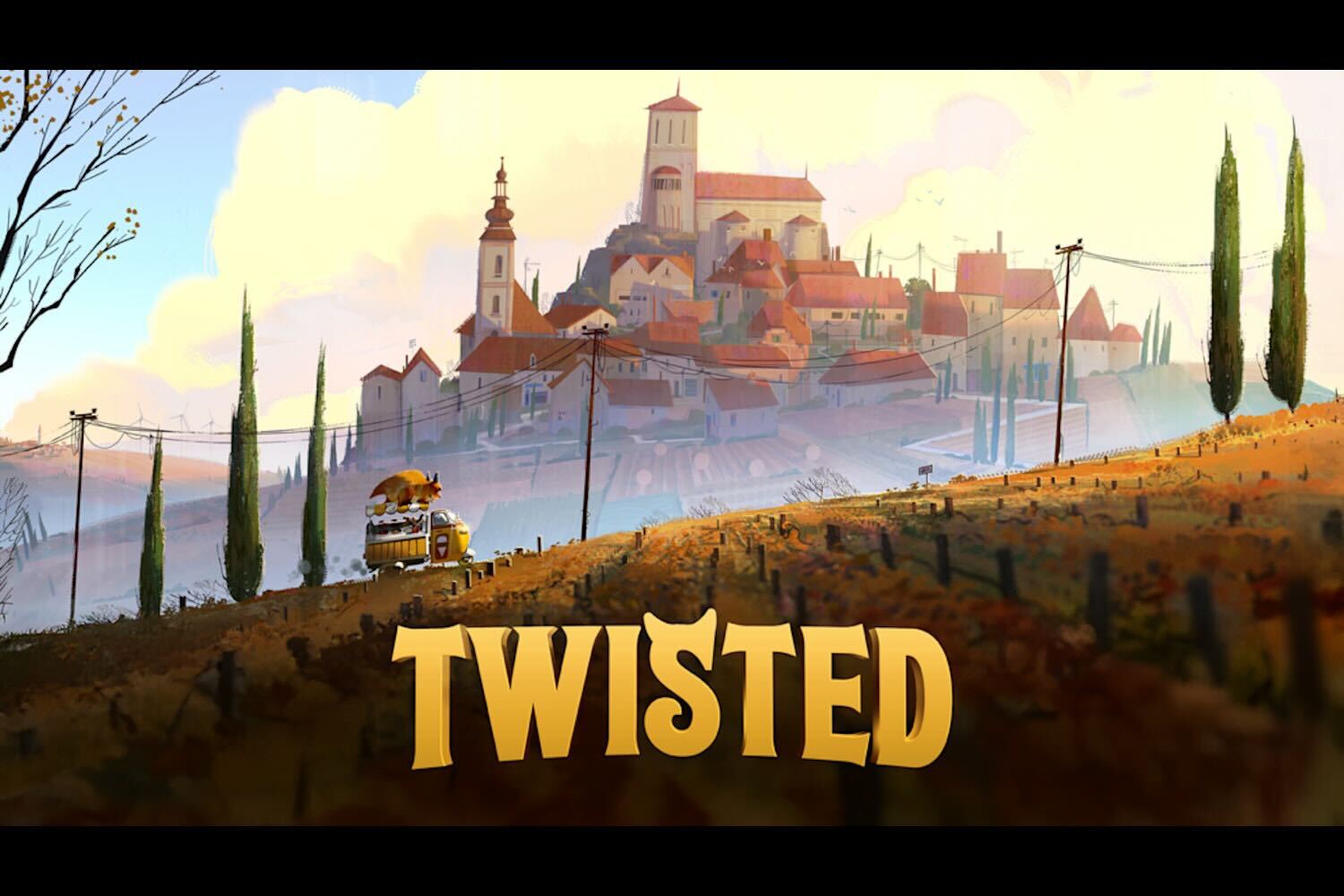
Dwarf Animation Studio is producing Twisted, an 80-minute animated feature directed by Lino DiSalvo, on a 16-month timeline including pre-production. To meet this schedule without compromising creative ambition, we built a pipeline in which Unreal Engine 5.6 is the final rendering and compositing environment. On our earlier production using Renderman, a single frame took 35 to 60 minutes to render and needed over 200 dedicated render nodes. On Twisted, a fully post-processed 2K frame renders in approximately 3 seconds on fewer than 10 farm nodes.
When render latency becomes negligible, the organizational logic built around managing that latency breaks down. This paper presents the technical systems we built to make this work: a multi-shot lighting workflow on nested Unreal Level Sequences with automatic shot group generation; a dual-format animation pipeline combining FBX and Alembic with per-asset tagging and a data-driven Blueprint architecture; a modified USD exporter that outputs environment data once per sequence with lightweight per-shot override files; a painterly look development pipeline built on custom shaders; and a performance strategy within a hard 16 GB VRAM limit on an RTX 5080. It also presents, with equal candor, what broke: the collision between departments that simultaneous data access made inevitable, and the organizational friction of migrating artists from a centralized network-drive pipeline to a version-controlled local workflow.
Technical Paper in the ACM Digital Library